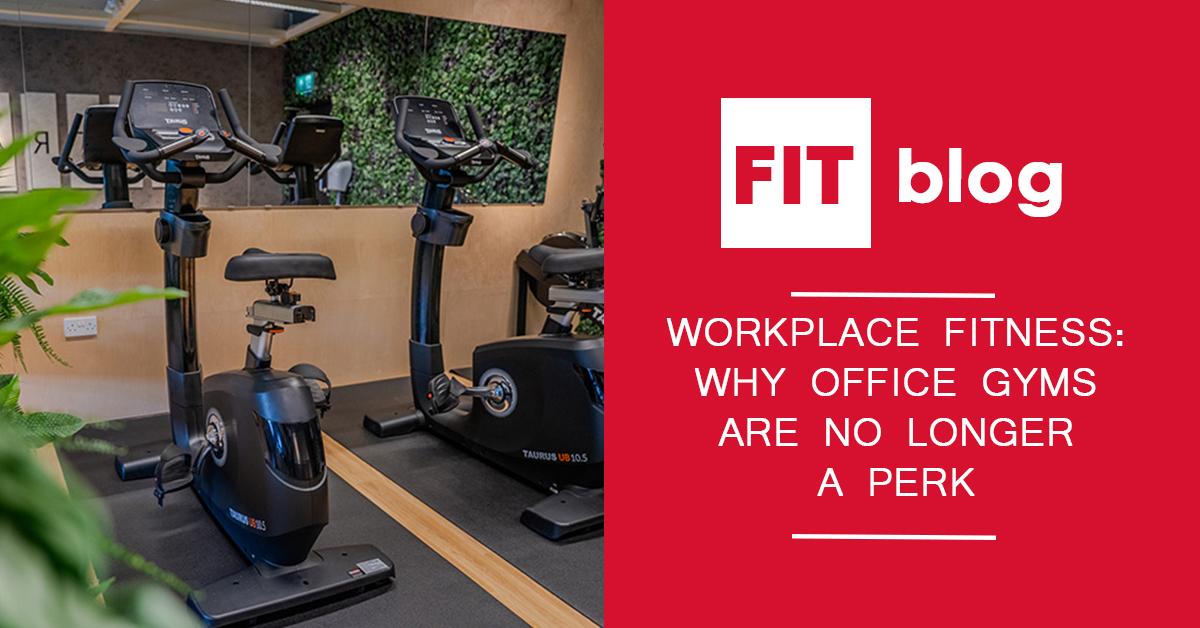
Workplace Fitness: Why Office Gyms Are No Longer a Perk
The way we work has shifted, and it’s not slowing down. Hybrid patterns, longer stretches of screen time, and more flexible hours have changed how the working day looks for many people. For office-based roles in particular, movement has dropped. There are fewer natural breaks in the day, and it’s easy to stay at a desk for hours without realising.
At the same time, expectations have shifted. Pay and annual leave are still front and centre, though they’re no longer the only things people weigh up. There’s more attention on how work affects energy, health, and day-to-day life. That’s led to a closer look at what employers actually offer. One-off perks or occasional initiatives don’t go very far. People tend to value support they can use regularly, as part of their normal working day.
This is where workplace fitness becomes more relevant. Demand is already there, and it’s growing. Recent UK data shows that 58% of employees now place greater importance on their wellbeing at work, while 84% say they would consider staying longer with an employer that offers stronger wellbeing support. At the same time, access is still limited. Only a small share of employers currently offer gym-related benefits, which leaves a clear gap between what people want and what’s in place.
Closing that gap starts with understanding what actually works. This guide covers what to consider and how to approach it in practice.
The rise of workplace wellness (and why it’s not going away)
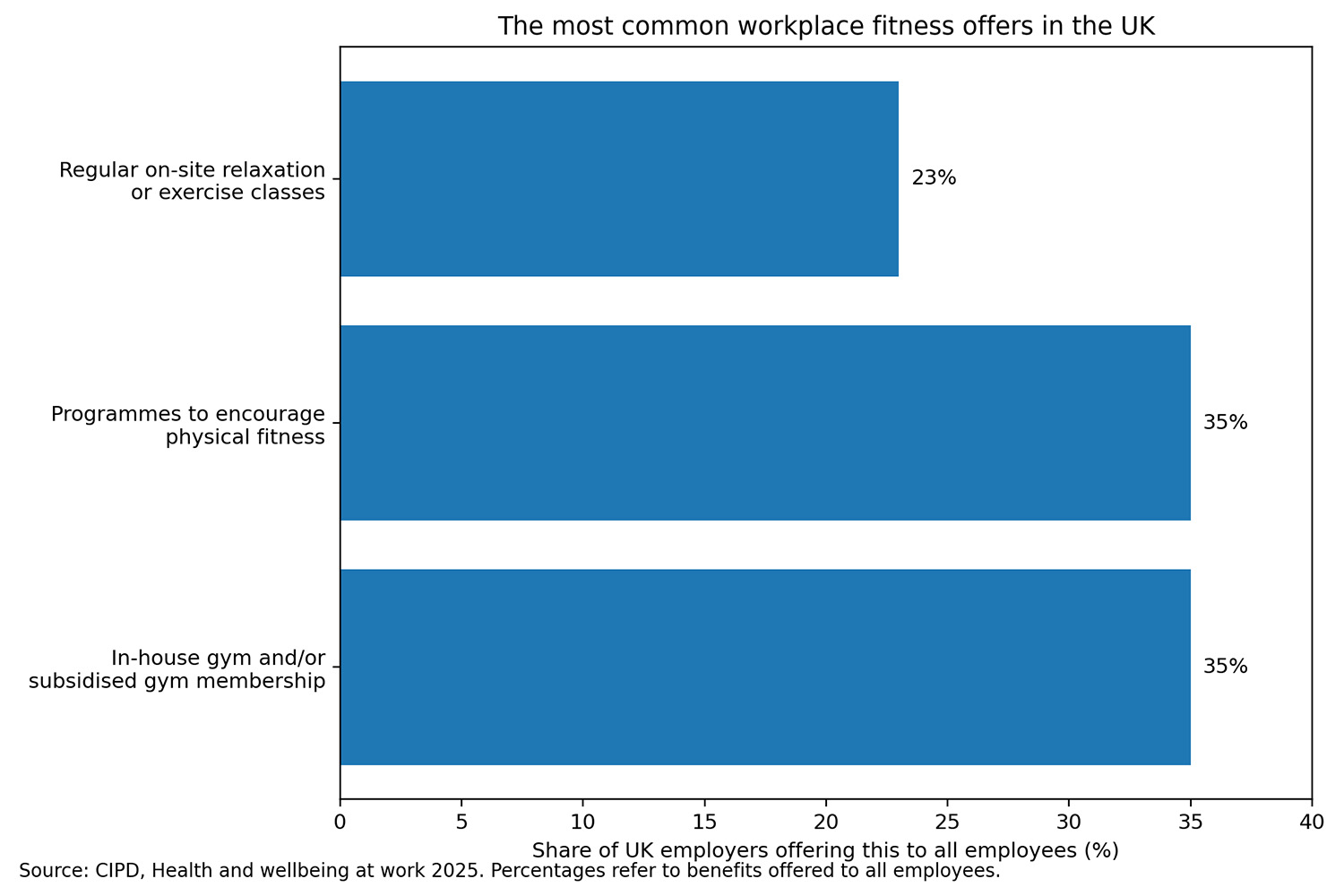
Source: CIPD, Health and wellbeing at work 2025
Over the past few years, more employers have invested in initiatives that support physical health, mental wellbeing, and day-to-day energy at work.
According to CIPD’s 2025 Health and Wellbeing at Work report, 35% of UK employers now offer an in-house gym and/or subsidised gym membership, while another 35% run programmes to encourage physical fitness, and 23% provide regular on-site exercise classes such as yoga or Pilates. Provision is more common among larger employers: 45% of private-sector organisations with 250+ employees offer gym access, compared with 17% of private-sector SMEs.
Rising awareness of stress, burnout, and sedentary habits has pushed wellbeing higher up the agenda. There’s also a clearer understanding that physical and mental health are closely linked, with regular movement playing a role in how people feel and perform at work.
As a result, more organisations are bringing wellness in-house. External perks like discounted gym memberships or one-off wellbeing days can help, though they often sit outside the working routine and see lower long-term use. On-site solutions tend to become part of the day, which leads to more consistent engagement.
Office gyms sit right at the centre of this shift. They offer something visible, practical, and easy to access.
How an on-site gym benefits your business
For employers, workplace fitness isn’t just about wellbeing. It directly impacts how a business attracts, supports, and retains its people.
Attracting top talent
Hiring has become more competitive, especially in roles where candidates have options. A well-planned on-site gym shows a company takes employee health seriously. It adds weight to an offer in a way that reflects how people work and live today.
Improving retention
People are more likely to stay where they feel supported day to day. Access to fitness during the working week can become part of someone’s routine, which strengthens their connection to the workplace over time.
Reducing sick days and absences
Regular movement plays a role in preventing common issues linked to sedentary work, such as back pain, low energy, and stress. Healthier employees tend to take fewer days off and recover more quickly when they do.
Strengthening company culture
Shared spaces like a workplace gym create informal points of connection across teams. It gives people a reason to interact outside of meetings and project work, which can help build a stronger internal community.
Demonstrating corporate responsibility
Wellbeing initiatives carry more weight when they are visible and easy to access. An on-site gym shows a clear investment in employee health, backed by something people can actually use during their working day.
Creating new team experiences
Fitness spaces open the door to activities that go beyond the usual socials. Group sessions, informal challenges, or lunchtime workouts give teams a different way to spend time together, without defaulting to after-hours events.
How on-site fitness benefits your employees
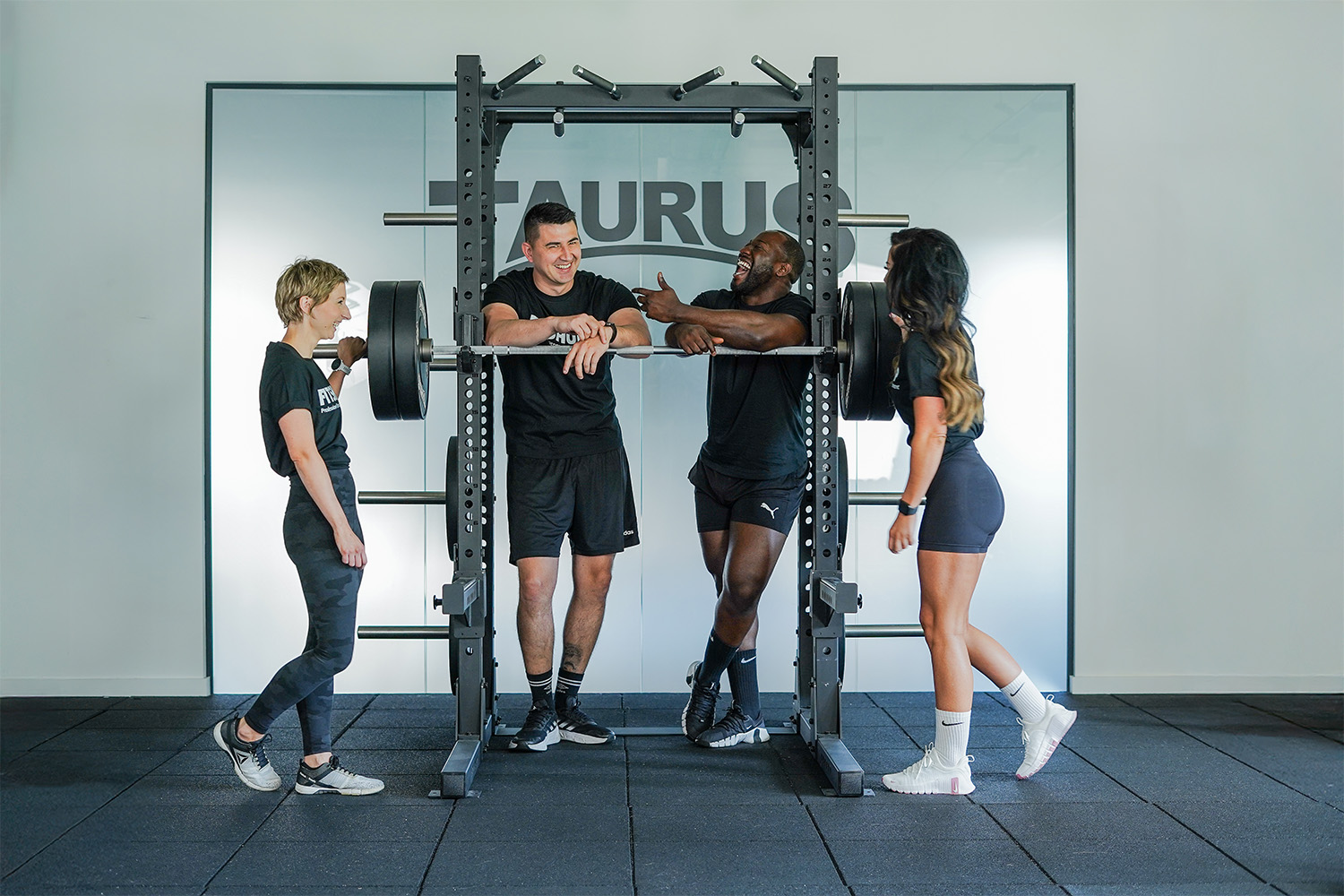
Fitshop’s office gym
A workplace gym only works if people actually use it. When it’s easy to access and fits into the flow of the day, it quickly becomes part of a routine.
Increased focus, energy, and productivity
Short bursts of activity during the day can help people reset. A quick session before work, at lunch, or between meetings often leads to better concentration and more consistent energy levels.
Improved physical health and overall wellbeing
Regular movement supports everything from posture and mobility to long-term health. For employees who spend most of their day at a desk, having a space to move makes a noticeable difference over time.
Better work-life balance through convenience
Fitting exercise around work can be difficult, especially with busy schedules or family commitments. Having a gym on-site allows people to train during the day, freeing up time outside of work.
Savings on external gym memberships
An on-site facility can reduce or replace the need for a separate membership. That’s a practical benefit employees feel straight away.
Less time spent travelling to and from the gym
Cutting out an extra journey makes it easier to stay consistent. Even a short session becomes more realistic when there’s no commute involved.
Reduced stress and improved mental clarity
Physical activity is one of the most reliable ways to manage stress. Having access to a gym during the working day gives employees a simple outlet to clear their head and return to work feeling more settled.
Case study: IKEA Glasgow – workplace fitness shaped around people and culture
The project
At IKEA Glasgow, more than 400 employees work across a busy, fast-paced environment. The team includes a mix of roles, many of which are physically active throughout the day. Alongside this, there’s a strong focus on company culture and creating a sense of community across the workforce.
The challenge
The goal was to create a gym that staff would actually use, not something that just looks good on paper. It needed to support different types of training, from strength work to cardio and quick sessions between shifts. Just as important, the space had to feel approachable, so people of all fitness levels would feel comfortable using it.
The solution
After an initial consultation, Fitshop carried out a site visit to get a better feel for the space and how the team works day-to-day. That helped shape a layout that feels open, practical, and easy to move around.
Equipment installed included:
Cardio
- Taurus UB10.5 Upright Exercise Bike
- Taurus T10.3 HD Pro Treadmill
- Taurus X10.5 Pro Rear Wheel Elliptical Crosstrainer
- Taurus Elite Row Rowing Machine
Strength training
- Taurus MS60 Elite Trainer – Multi Function Gym Rack System
- Taurus Pro Adjustable Bench
- Taurus Rubber Hex Single Dumbbells
- Taurus Black Olympic Rubber Bumper Weight Plates
- Taurus Elite Plate Tree
- Taurus 2-Tier Dumbbell Rack
- BodyCraft GX Multi Gym
The outcome
The gym has quickly become part of daily life at IKEA Glasgow. Over 120 employees signed up for an induction early on.
We are super happy with the quality of equipment and the service from Fitshop has been great. They used their expertise to find the best solution and it has really helped elevate our gym.
— John, People & Culture Manager IKEA Glasgow
How to successfully implement an office gym
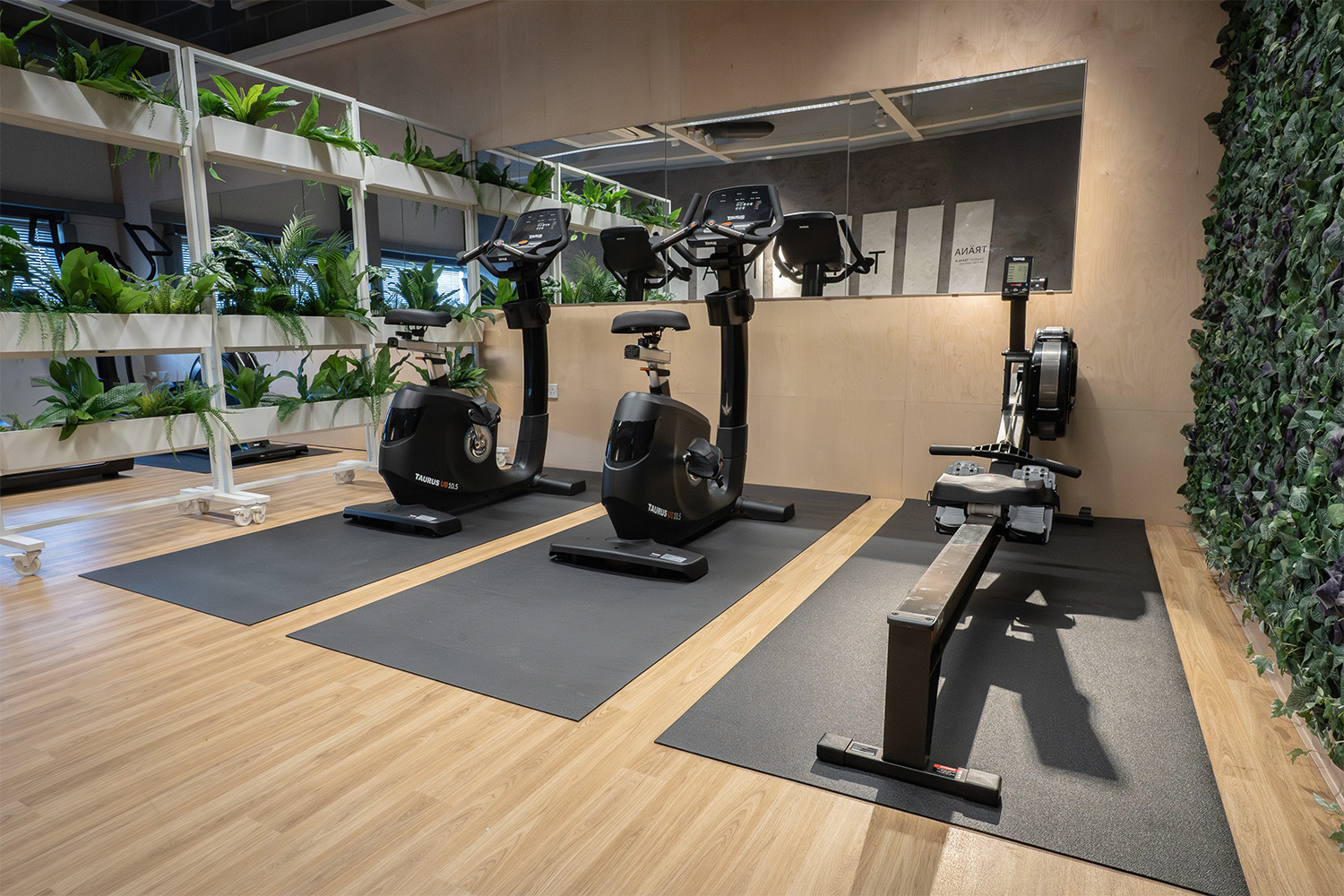
IKEA’s gym
Setting up a workplace gym comes down to a few key decisions, from layout and equipment to how the space fits into the working day.
Design and layout
Good lighting goes a long way, especially when there’s natural light. It helps the space feel like part of the workplace, and somewhere people are happy to spend time. Clear zones make the space easier to navigate. Most setups include a strength area, a section for cardio, and some open space for stretching or floor work. In smaller offices, the same area can be used for different types of training, which helps make better use of the space without it feeling crowded.
Amenities
Small details play a big role in how often the gym gets used. Showers, lockers, and changing areas make it easier to fit a session into the working day. Easy access helps too. If people can pop in for 20 minutes between meetings or before heading home, it’s more likely to become part of their routine.
Expert support
Planning a gym in a working environment comes with a few challenges. Partnering with a specialist helps avoid issues like overcrowding, underused equipment, or layouts that don’t quite work. It also helps to offer simple inductions when the space opens. A short introduction or a few suggested workouts can give people the confidence to start using the gym and stick with it.
What equipment should you include in your office gym?
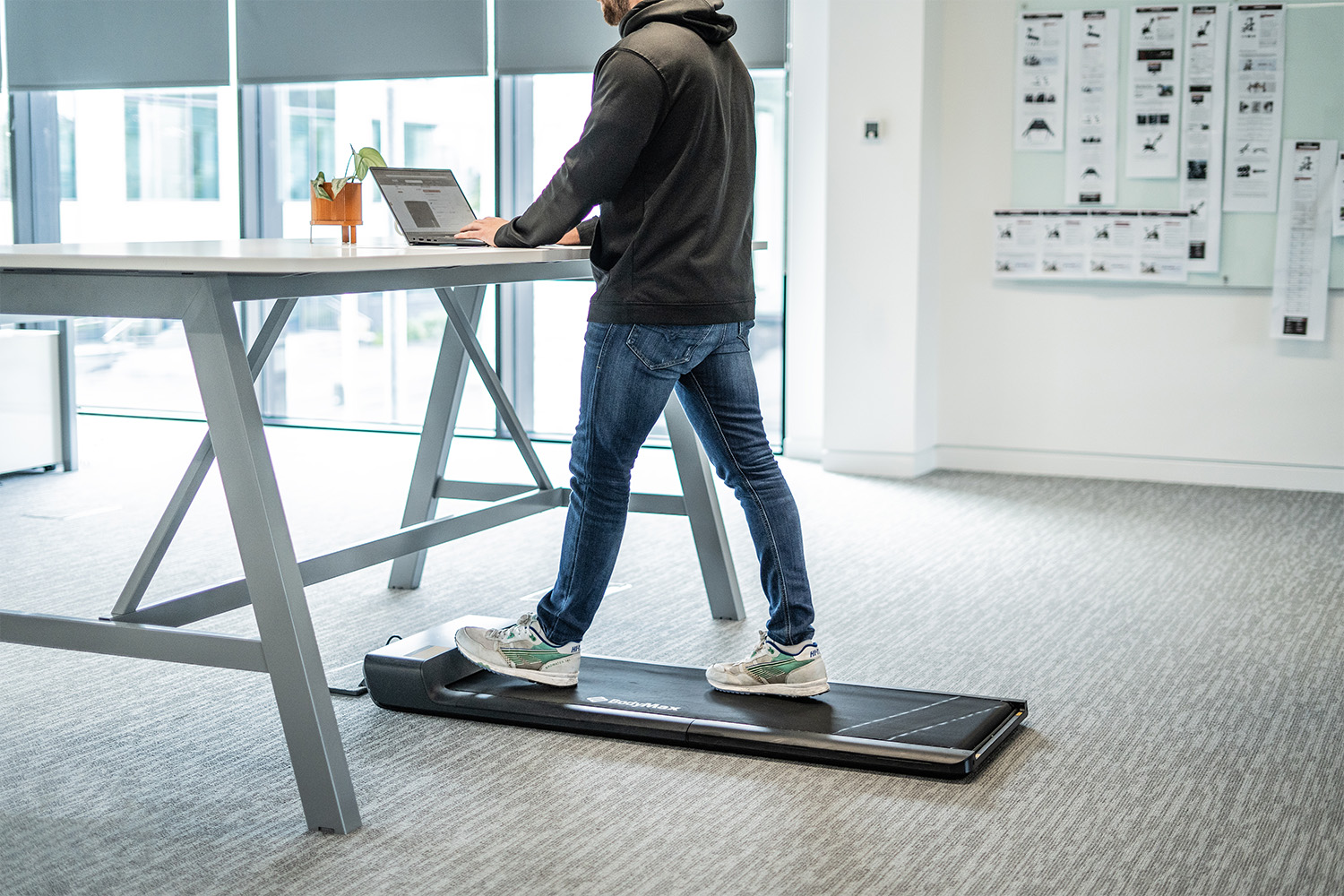
BodyMax WP60 Walking Pad
What you include in your office gym comes down to how much space you have and how people are likely to use it day to day.
Small office gym essentials
In a compact space, each piece of equipment needs to earn its place.
- Adjustable bench and dumbbells: for a range of strength exercises
- Compact cardio machine: a bike, rower or walking pad
- Resistance bands and accessories: easy to store, useful for quick sessions
- Multi-function trainer: one station, multiple exercises
- Basic recovery tools: foam rollers, mats, massage balls, and stretch bands
Medium office gym essentials
With a bit more room, you can create clearer zones and offer greater choice.
- Free weights area: dumbbells, benches, and storage
- Cardio section: treadmills, bikes, or cross trainers
- Functional training space: mats, medicine balls, and open floor area
- Cable or multi-gym system: adds more exercise options in one station
- Wellness and recovery: foam rollers, massage balls, stretch bands, and mats
Large or enterprise office gym options
Larger workplaces can create a more complete fitness space, similar to a commercial gym.
- Full strength area: racks, barbells, plates, and benches
- Cardio range: multiple machines to support higher usage
- Functional training zone: space for circuits and group sessions
- Studio space: for yoga, Pilates, or guided sessions
- Additional machines: more targeted strength equipment
- Wellness and recovery: massage chairs, foam rollers, percussion massage guns, and stretch areas
Trusted by leading UK organisations
Fitshop works with businesses across the UK on workplace gyms, from compact office spaces to larger, multi-site projects. With over 40 years of experience, the approach is simple: get the layout right, choose equipment that lasts, and create a space people can use day-to-day.
That experience is reflected in the organisations Fitshop works with, including BBC, NHS, Bank of England, Holiday Inn, Nuffield Health, and Arnold Clark.
Businesses also get access to trusted equipment brands such as Taurus, Matrix, Life Fitness, Inspire Fitness, Centr, Nike Strength, Exigo, Force USA, NOHRD | WATERROWER, BAHE, Gymproluxe, and others, with support there if anything needs attention later on.
Flexible finance options are available, and you’ll have a dedicated contact to guide things along.